

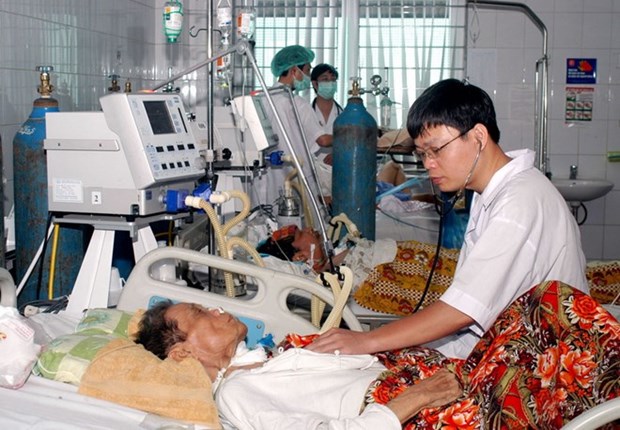
 Illustrative image (Source: VNA)
 Medical Services and the (WHO) in Vietnam opened a
training course in Hanoi on May 7 for lecturers major in high blood pressure
and diabetes management in communal medical stations.
Speaking at the event, Deputy Health Minister Assoc. Prof Pham
Le Tuan said under Resolution No.20-NQ/TW dated October 25, 2017 by the Party
Central Committee on the protection, care and improvement of public health in
the new situation, 95 percent of medical stations in wards, communes and
townships will prevent, manage and treat several non-communicable diseases by
2025 and the rate will reach 100 percent by 2030.
Earlier, the Prime Minister approved Decision No.376/QD-TTg
dated March 20, 2015 on the national strategy on preventing non-communicable diseases
for the 2015-2025 period and Decision No.2348/QD-TTg dated December 5, 2016 on
strengthening health care at the grassroots level.
WHO chief representative in Vietnam Kidong Park said high
blood pressure and diabetes, which could be easily diagnosed and treated at
grassroots medical stations, are the most important risks of cardiovascular and
non-communicable diseases in Vietnam and the world.
Participants discussed early diagnosis, treatment and
management of and diabetes, nutrition and physical
activities in the field, family medicine principles in management, common
guidelines on prevention and management of non-communicable diseases at grassroots
medical stations, among others.
Statistics in 2015 showed that only 43.1 percent of high
blood pressure patients were diagnosed and 13.6 percent were treated in medical
stations. Meanwhile, 31.1 percent of diabetes patients and 28.9 percent were
diagnosed and treated, respectively.-VNA
Source: VietnamPlus


