

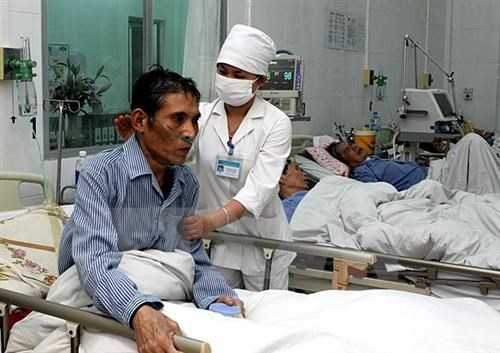
 TB patients are treated at Hanoi’s Central Lung Hospital. (Photo: VNA)
Hanoi (VNS/VNA) – Vietnam is facing an uphill battle to control
(TB), with about 174,000 people in the country contracting the
disease each year and 13,000 fatalities.
According to the World Health Organisation, Vietnam ranked 11th among the 30
countries with the biggest burdens of TB in the world.
Director of the Hanoi-based Central Lung Hospital Nguyen Viet Nhung said that
the number of TB cases in Vietnam was falling slower than expected.
Nhung, who is also head of the National Programme on TB prevention and Control,
blamed the slight decrease of TB cases in Vietnam on ineffective control over
cases.
Other contributors were understaffing, low public awareness on preventing and
controlling the disease, and a preference for self-treatment.
Most TB patients in Vietnam were poor with a limited understanding of the
illness, which resulted in difficulties detecting and avoiding the infection
source, Nhung said.
Public discrimination against TB patients made the patients tend to hide their
conditions, he said.
“Hiding the disease is irresponsible to the patients themselves and to the
community,” Nhung said, adding that it could cause severe consequences
including more serious damage to the patients, longer treatment and higher risk
of spreading the disease.
“In the fight against TB, each patient is a “soldier” who helps control and
prevent the disease from spreading among the community. The community should
assist them rather than discriminate against them,” Nhung said.
In the last ten years, under the National Programme on TB Prevention and
Control, Vietnam has implemented a strategy with four key innovations to fight
TB: awareness, technology, approach and investment.
Last year, Prime Minister Nguyen Xuan Phuc approved the establishment of a
national committee to combat TB with the key task of ending TB by 2030.
In the national healthcare system, there are 51 hospitals specialising in TB
treatment across the country. Of them, 48 provincial-level hospitals have
mastered techniques recommended by the WHO.
Nhung said the prevention and control network had reached grassroots levels
in wards, hamlets and villages to deliver early detection and treatment.
Groups that are vulnerable to TB like prisoners, those with diabetes, HIV or
drug addicts had been involved in a pilot programme for early intervention.
Vietnam had been strengthening research and improving its legal framework to
realise its goal of ending TB.
At a meeting last week ahead of World TB Day that falls on March 24, Deputy
Prime Minister Vu Duc Dam asked the Ministry of Health and agencies to develop
plans to provide sufficient funding for TB prevention and control to reach the
2030 target.
The Deputy PM also asked for further communication to improve public
understanding of the disease.
“TB is a communicable disease but we don’t need to fear it. TB is no longer
uncurable because now, we have strengthened our financial ability and modern
technology to test and treat it,” he said./.
Source: VietnamPlus


