

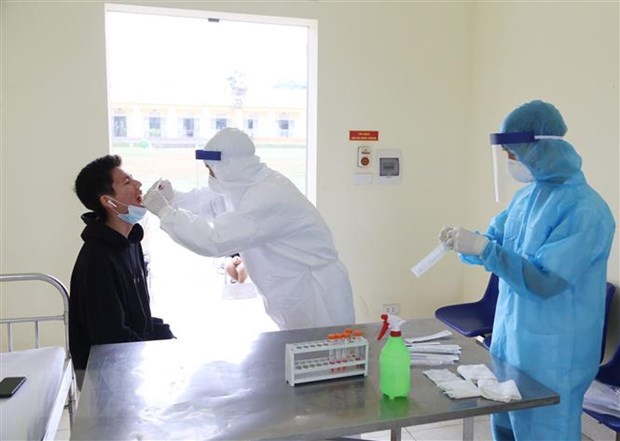
 Taking samples for COVID-19 test at concentrated quarantine area (Source: VNA)
Hanoi (VNA) – Deputy Health Minister Nguyen Truong Son signed a
decision issuing for the acute respiratory
disease caused by the novel coronavirus (COVID-19), the Health Ministry
reported on March 26.
The new guidelines will replace of the old ones issued on
February 20.
Most fatalities are among the elderly, and people with
immunodeficiency or chronic diseases. The incubation period is between 2 to 14
days (5-7 days on average). Common symptoms are a fever, dry cough, fatigue and
muscle aches. Some cases include a sore throat, stuffy nose, runny nose or
headache, cough with phlegm, vomiting and diarrhea. The average time from the
initial symptoms to the severe course of the illness is usually about 7-8 days.
Most people (about 80 percent) only have a mild fever,
cough, fatigue, and no pneumonia, and recover on their own in about a week. About
14 percent of cases with severe developments such as pneumonia need
hospitalization. About 5 percent of cases need to be treated in intensive care
units with symptoms of acute respiratory failure, septic shock, and organ
failure, including kidney and heart muscle damage that lead to death.
In children, the clinical manifestations are much milder
than adults. Their common symptoms are fever and a cough or pneumonia
manifestations. The rate of serious illnesses in children is less than
in adults.
Patients after treatment will be discharged from hospital if
the fever goes away for at least three days, clinical symptoms improve well,
survival signs are stable, blood tests are normal, and chest X-rays improve.
Especially, they must test negative for SARS-CoV-2 at least twice within 24
hours. After leaving hospital, the patients will continue to be quarantined
at home for 14 days and take their body temperature twice a day.
The new guidelines have many new points. The definition of a
suspected case has been altered because the epidemiological situation has
changed, and there are many epidemic areas and outbreaks in Vietnam. The
definition of a possible case has been removed as testing capacity in the
country is higher than before.
In terms of treatment, the main focus is on respiratory
failure with updates on the latest recommendations from the World Health Organization
on oxygen therapy and blood oxygen targets.
The guidelines stress the importance of the close monitoring
of patients, especially on the 7th to 10th day of the disease, to promptly detect
and handle serious progression.
For patients with severe respiratory distress, incubation
and mechanical ventilation should be used early. Non-invasive respiratory
support measures should be considered for each specific case.
Regarding specific antiviral drugs such as Lopinavir/Ritonavir, Chloroquine, Hydroxychloroquine and Remdesivir, the Health Ministry
does not recommend using them as there is insufficient evidence on their
effectiveness and safety. The ministry will issue additional recommendations
based on the results of studies in the world and in Vietnam./.
Source: VietnamPlus


