

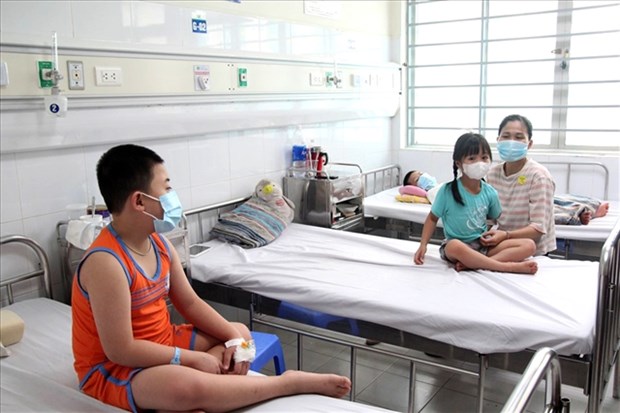
 Children treated at the National Children’s Hospital. (Photo: laodong.vn)
Hanoi (VNS/VNA) – Dengue fever cases dropped
significantly in during the first eight months of this year, but the
country needed to remain as there were currently cases in 58
provinces and cities and the risk of a greater outbreak was extremely high,
experts have said.
According to the General Department of Preventive Medicine under the Ministry
of Health, the number of dengue cases this year had reached 60,525 with seven
deaths as of September 6. This was compared to 178,200 cases with 38
deaths reported during the same period last year.
Hanoi is considered a hotspot for dengue fever in the North. The capital city
has recorded a total of 2,200 cases since the beginning of this year, including
two deaths.
The number of cases has decreased by 47.2 percent compared to last year’s
figure.
Hoang Duc Hanh, deputy director of the municipal Department of Health, said the
number of cases was likely to increase.
From September 7-13, 399 cases were reported in the city, 171 more
than the previous week.
“This year dengue fever in Hanoi first appeared in suburban districts such
as Phuc Tho, Thuong Tin and Thanh Oai and then spread to the inner city. The
epidemic reaches its peak between August and November every year and the
number of cases will continue to increase until November,” he said.
Hanh said the dengue fever epidemic this year might not turn into major
outbreak but strengthened preventive measures were needed as it coincided
with the COVID-19 pandemic.
The weather was among the factors accounting for the increase in dengue fever
patients, he said, adding that hot weather along with rain creating favourable
conditions for mosquitoes to transmit and develop.
Localities were being urged to spray for mosquitoes in high-risk
areas or areas with dengue fever patients, Hanh said.
In HCM City, as many as 500 new cases of dengue fever have been reported weekly
over the past two months.
According to HCM City’s Centre for Disease Control and Prevention, the number
of dengue fever cases had declined by 71.8 compared with the same period
last year.
The city has seen 11,404 cases of dengue fever since the beginning of the year.
However, the figure has spiked in recent weeks. About 543 cases
were reported in the last week of August in 13 out of HCM City’s 24
districts.
According to statistics from the Central Highlands’ Institute of
Hygiene and Epidemiology, the number of cases across the
region’s five provinces in the first eight months of this decreased
sharply compared to the same period in 2019.
Director of the institute Vien Chinh Chien said most cases had been
detected in remote areas that were home to ethnic minority
groups. He pointed to a number of factors leading to the spread of
the epidemic, including poor sanitation and inadequate public awareness
of the issue.
In the following months, the unit would instruct those provinces to
closely monitor the progress of the outbreak, he said.
Trinh Quang Tri, deputy director of Dak Nong’s Centre for Disease Prevention
and Control agreed.
The epidemic was very difficult to control due to the terrain, he said,
adding that the province had recorded only 350 cases over the past eight months.
As the number of patients being hospitalised with dengue fever was on the
rise, doctors advised people not to be complacent.
Nguyen Van Lam from the National Children’s Hospital said over 60 children
had so far been admitted for dengue fever treatment, mostly in August and
September.
They were of different ages but fortunately there had been
no critical or fatal cases.
He warned that in the early stages of dengue fever, it could easily
be mistaken for another illness.
People should check for warning signs such as abdominal pain, bleeding
under the skin, dehydration or vomiting, and children should be admitted
to hospital if any of these showed up, he said.
According to Do Duy Cuong, director of the Centre for Tropical Diseases
at Bach Mai Hospital, patients with dengue fever usually recover
after seven days of treatment. However, about 5 percent could become
critical if they are not treated in time./.
Source: VietnamPlus


