

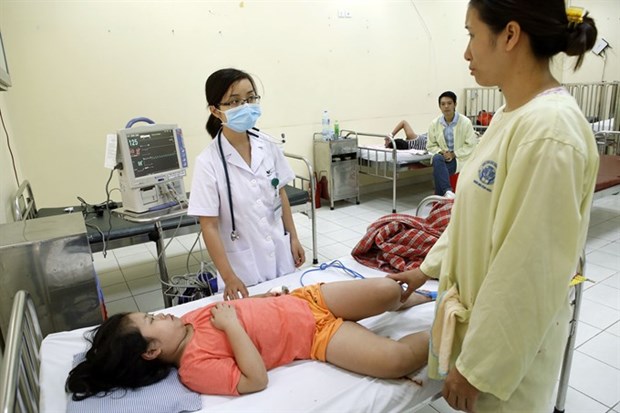
 Some 30 per cent of patients at the National Children’s Hospital (NCH) suffer from drug-resistant bacteria stemming from improper use of antibiotics.(Source: VNA)
Hanoi (VNA) – Some 30 percent
of patients at the (NCH) suffer from
drug-resistant bacteria stemming from improper use of antibiotics.
Doctors are warning parents
against buying medicines for their children without doctors’ prescription.
Besides living environment or antibiotic residues in food, dosing without
consulting a doctor is the main reason for drug resistance.
NCH examines about 4,000
patients and treats 1,700 inpatients a day. Among them are 300 children using
medical ventilators and oxygen concentrators, and 70 to 80 patients with
catheters. Most of the inpatients were transferred from provincial
facilities with these medical devices, increasing the high risk of
hospital-acquired infection.
Hospital-acquired
infections are getting worse, according to Tran Minh Dien, vice director of
NCH. “Many patients transferred to our hospital have .
Therefore, we have to identify cases of hospital-acquired infection to offer
suitable treatment regimens,” said Dien.
Antimicrobial resistance
causes difficulties in treatment. Doctors and microbiologists have collaborated
to manage antibiotics used in treatment to control the consequences of
antimicrobial resistance.
Infection control and
proper antibiotics usage are key factors to prevent hospital-acquired
infection, according to Dien.
“Doctors need to practice
good screening and isolation. Medical staff and patient relatives,
additionally, have to obey the procedure of sanitising to prevent infection,”
he said. “In addition, doctors should be aware of proper
usage. Every six months, the hospital issues microbial reports for doctors to
develop decent medical regimens.”
Bacteria generally develop
gradual resistance
to a drug over a ten to 30-year period, but the misuse and overuse of antibiotics shortens this process.
Parents and doctors are
advised not use antibiotics
for every cold and cough, and only when patients suffer from infections – and
even then, a modest dose. They should stop taking antibiotics longer than necessary or ending the course
too early.
Overuse of antibiotics can
allow bacteria to
change in some way that either protects them from the action of the drug or
neutralises the drug. On
other hand, stopping using antibiotics too soon may create favorable conditions
for bacteria to revive and become resistant from drugs.
Antimicrobial resistance
causes about 700,000 deaths per year globally, according to a report
by the World Health Organisation (WHO). Ten million people will die annually by
2050 if the problem is not curbed.
In August 2017, Vietnam adopted
a National Action Plan to tackle the overuse of antimicrobials in livestock and
fisheries in an effort to control antimicrobial resistance.-VNA
Source: VietnamPlus


