

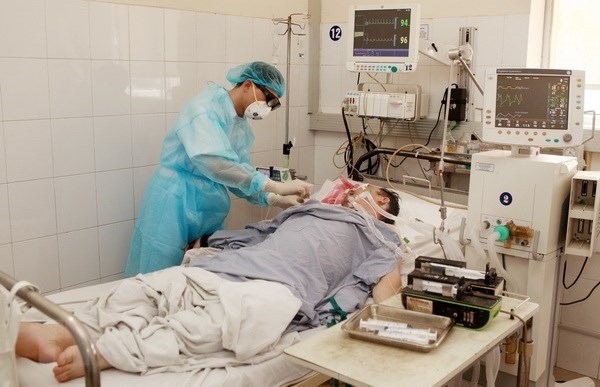
 Patients with symptoms of A/H1N1 swine flu should receive treatment at hospitals and be segregated to prevent the spread of the virus (Photo: VNA)
Delta are taking measures to prevent the spread of swine
flu A/H1N1 in the region.
The rainy season is an ideal environment
for many and puts the region under high risk of a .
Since the beginning of the year, the has
recorded four deaths from swine flu, including one in Vinh Long province, one
in Ca Mau province and two in Ben Tre province. Many swine flu cases have also
been recorded in Hau Giang province.
Phan Thanh Tung, Deputy Director of Hau Giang province’s
Department of Health, said in April it had launched a campaign to prevent and
control A/H1N1 flu, providing treatment guidance to locals. Localities report weekly to the department and
the province’s steering board for epidemic prevention.
Meanwhile, Vinh Long province’ health sector has
worked with authorities in Tam Binh district to check the temperatures
of relatives and medical staff who have had
contact with a woman who died from swine flu.
The situation is stable, but the province is
encouraging people to get flu vaccinations, said Nguyen Cong Tuan, Deputy Director
of Vinh Long province’ Department of Health.
After the first A/H1N1 case, Can Tho city’s
Health Department sent information about preventive measures to private medical
facilities and public hospitals in the province.
Surveillance has been enhanced to detect
any suspected case of influenza A/H1N1 at health care facilities or
community-based care. Hospitals and clinics have prepared enough vehicles,
medical equipment and medicine to tackle any outbreak.
Deputy Director of Can Tho city’s Department of
Health, Nguyen Trung Nghia, said that usually occurred with
early symptoms such as high fever, coughing, headaches and muscle pains.
Most infected people can recover in a week without special treatment.
However, it can become severe in
people over 65 years old, children under five, pregnant women and
people suffering chronic diseases such as diabetes, kidney failure,
obesity and chronic obstructive pulmonary disease.
He recommends that people should be vaccinated
and go to hospitals or medical facilities if they show signs of swine flu.
The influenza A/H1N1 virus can survive for 24–48
hours on the surface of tables, chairs, cabinets and handrails, eight
to 12 hours on clothing items, and around five minutes on the palm of the hand.
It can also survive four days in bodies of
water at temperatures of 22 Celsius degrees and live up to 30
days at temperature of zero Celsius degrees. Thus, swimming pools at hotels could be a site for the
virus to develop, especially in the rainy season.
The disease is
easily transmitted from person to person through
respiration spread from sneezing or coughing, or through direct
contact with objects containing the virus.
It has similar symptoms to seasonal flu and can
be diagnosed by collecting nasal and throat fluids for testing.
Doctors recommend that people pay attention to personal hygiene; clean up their
environment around houses, classrooms and workplaces; avoid direct contact with
A/H1N1 patients or people suspected of being infected; and do not use drugs
without permission.-VNS/VNA
Source: VietnamPlus


